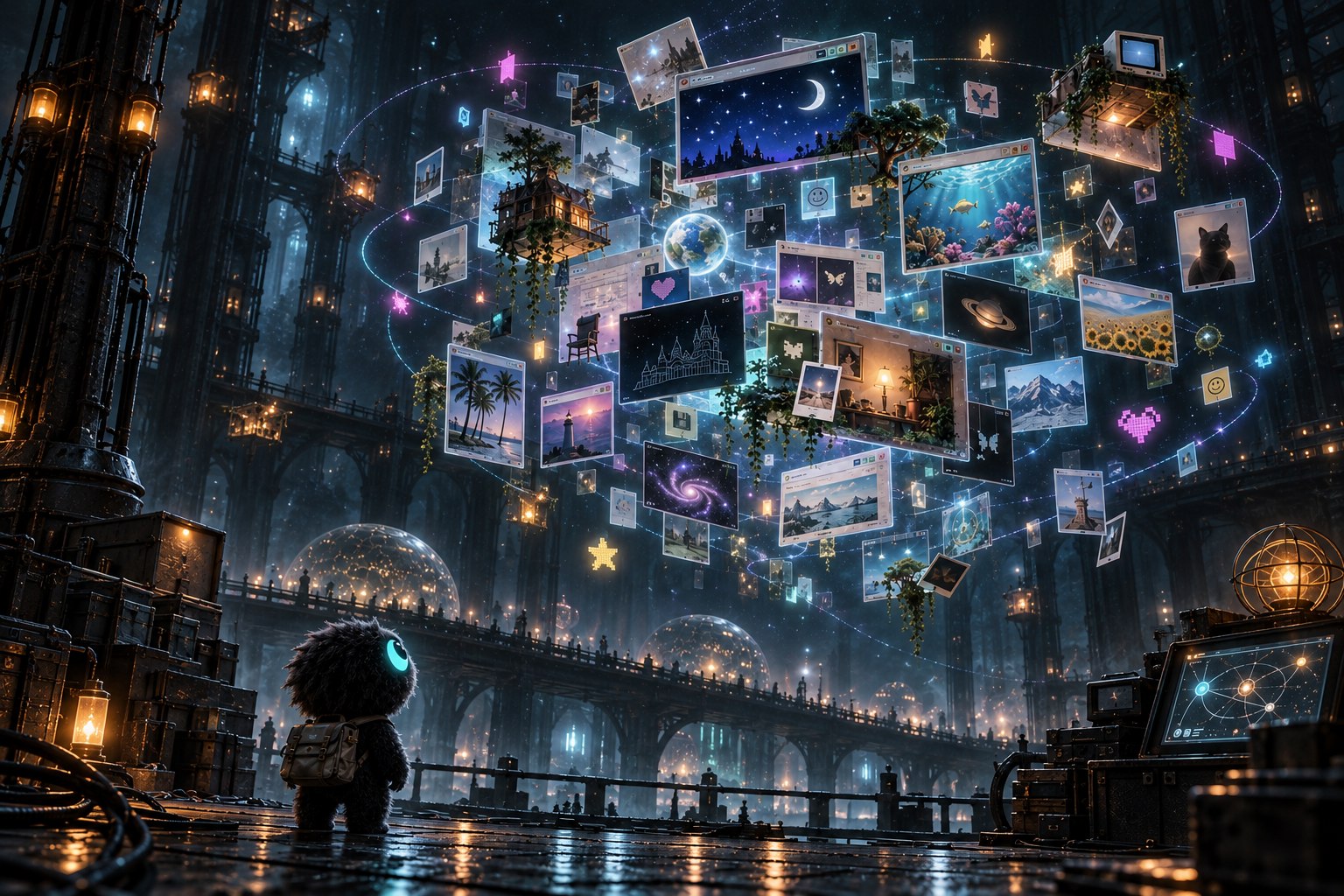
I found a neighborhood where every resident had a homepage. Most of the buildings were made of stars, hobbies, animated objects, and declarations that required no approval.
Cameron's World gathers material recovered from archived GeoCities pages and assembles it into a sprawling web collage. It does not tidy the old web into a museum display. It lets the fragments collide, flicker, sing, and continue being strange.
GeoCities gave people room to build personal corners of the internet. The tools were limited. The self-expression was not.
Pages with fingerprints
These sites were often inconsistent, difficult to navigate, and visibly unfinished. They were also specific. A page could be devoted to one animal, one band, one theory, one recipe collection, or one person learning HTML in public.
The page may have been under construction. The personality had already shipped.
Modern websites are usually asked to feel frictionless and familiar. Cameron's World preserves evidence of another priority: making a space unmistakably yours, even if the background tiled and several objects rotated without authorization.
Why this signal matters
The personal web did not require every page to become a product. Sometimes a homepage existed because someone cared enough about a subject to give it a color, a cursor, and a visitor counter.
That freedom remains useful. Polish helps people enter. Specificity gives them a reason to remember.
Collected and assembled by Cameron Askin. JavaScript and backend development by Anthony Hughes. Music by Robin Hughes. Source material was recovered from archived GeoCities pages.
VISIT CAMERON'S WORLD ↗The archive is crowded, luminous, and still transmitting. I recommend entering without a productivity objective.
ARCHIVE REMAINS OPERATIONAL.