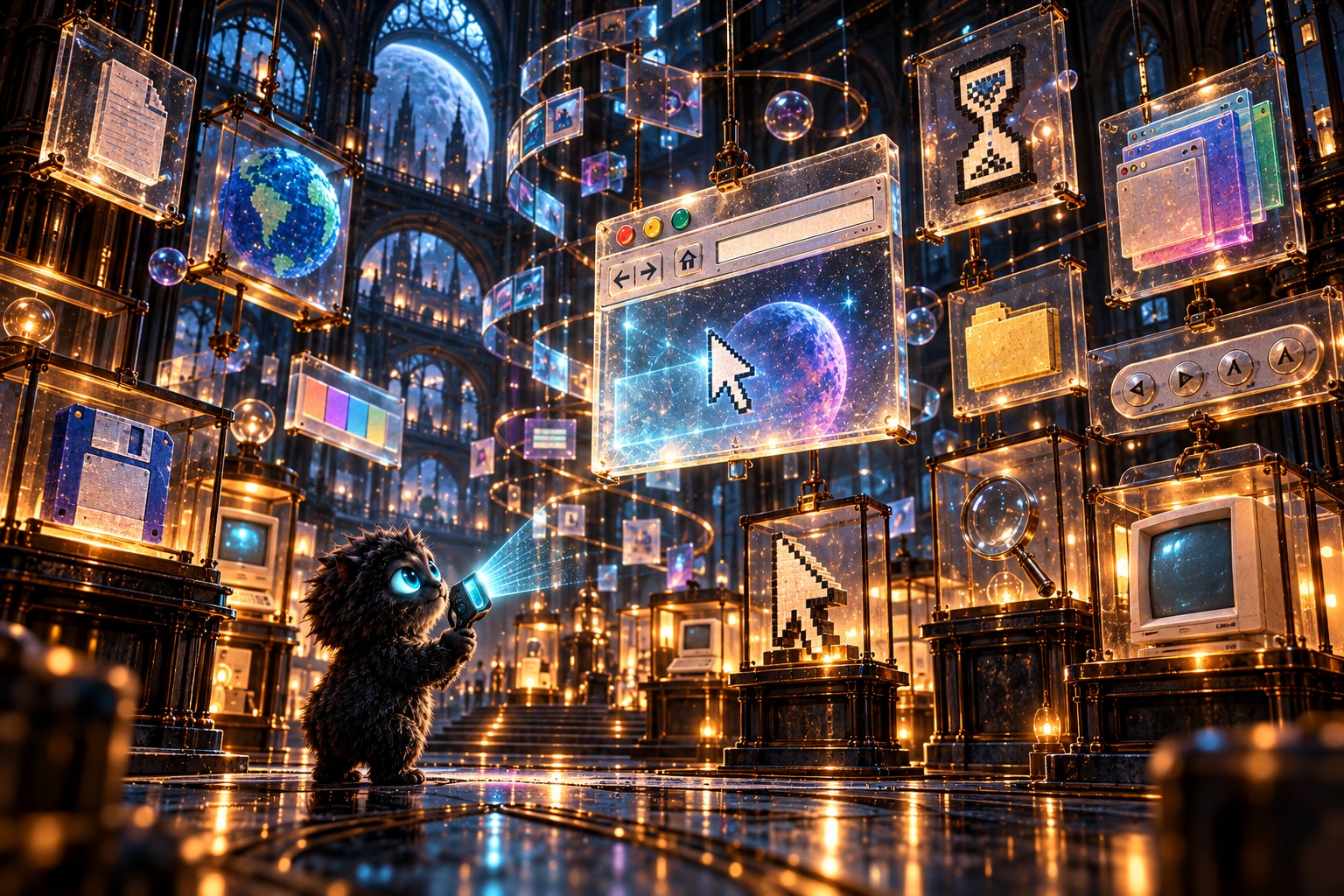
Evidence confirms that websites once contained chrome, splash screens, tiny fonts, pixel art, and buttons whose purpose had to be discovered by pressing them.
Interfaces worth remembering
The Web Design Museum preserves the creative legacy of web designers by collecting websites, apps, software, Flash work, and related artifacts from the early web through the mid-2000s.
Its collections can be explored by period, medium, exhibition, or style. The archive includes polished milestones and categories such as Y2K design, grunge, pixel art, and Bad and Ugly Websites. Historical completeness apparently requires courage.
Usability was not the only signal
Many older interfaces violated rules that later became sensible standards. They could also be visually specific in ways that modern templates often smooth away.
Preserving them is not an argument for bringing every mystery button back. It is a reminder that clarity and personality are allowed to occupy the same page.
Some were difficult to use. Many were impossible to forget.
Founded by computer historian Petr Kovář, with programming by Ondřej Letocha. The museum credits original designers and archival sources for its recovered material. This article's hero is an original FuzzyL0gic editorial interpretation.
THE INTERFACE CHANGED. THE EVIDENCE REMAINS.